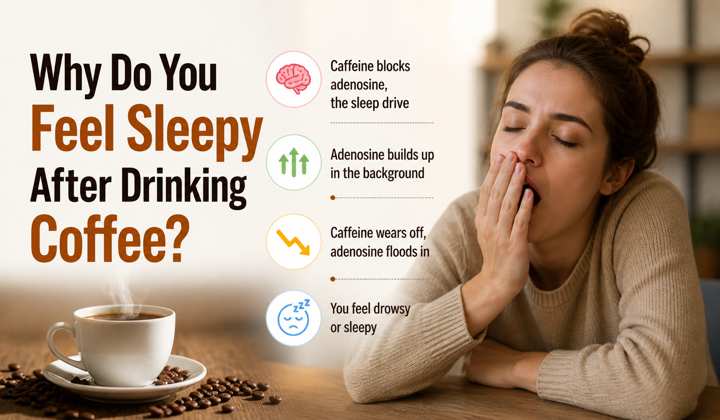
Coffee makes you sleepy primarily because caffeine blocks adenosine receptors in the brain rather than eliminating adenosine itself, so when caffeine wears off, the accumulated adenosine floods those receptors all at once and causes a sudden wave of fatigue.
Additional causes include caffeine-triggered cortisol crashes, blood sugar dips from coffee consumed on an empty stomach, dehydration from caffeine’s mild diuretic effect, and caffeine tolerance built up through regular high-dose consumption.
Timing, dose, brewing method, and individual genetics all determine how strongly these effects hit you and when. Adjusting any one of these variables can significantly reduce or eliminate post-coffee drowsiness.
If you’ve ever downed a cup of coffee expecting energy and ended up more tired than before you started, you’re not imagining it and you’re not alone. It’s one of the most common and most misunderstood experiences among daily coffee drinkers.
The answer isn’t that coffee “stopped working.” It’s that several overlapping biological mechanisms are operating simultaneously, and depending on your habits, your body chemistry, and your brewing choices, any one of them can push you toward drowsiness instead of alertness.
This guide breaks down every cause in plain terms, explains which types of coffee consumption patterns make each cause worse, and gives you practical fixes that work for the real way people drink coffee every day.
How Caffeine Actually Works in the Brain
The Adenosine Blocking Mechanism
Adenosine is a chemical your brain produces continuously throughout the day as a natural byproduct of neural activity. As adenosine builds up and binds to adenosine receptors, you progressively feel more tired. This is your brain’s built-in sleep pressure system.
Caffeine doesn’t destroy adenosine or reduce its production. It works by physically fitting into adenosine receptors and blocking them, preventing adenosine from binding. With those receptors blocked, your brain can’t register the accumulated fatigue signal, and you feel alert.
The critical problem is that adenosine keeps accumulating the entire time caffeine is blocking the receptors. When caffeine clears your system, typically 4 to 6 hours after consumption, all that stored-up adenosine binds to the now-open receptors simultaneously.
That sudden adenosine flood is the “caffeine crash.” It hits harder than normal fatigue because the signal has been delayed and compressed into a single wave instead of arriving gradually.
The Half-Life Factor
Caffeine has a half-life of approximately 5 to 6 hours in most adults. This means half the caffeine from a morning cup is still active in your system 5 to 6 hours later. For people who metabolize caffeine slowly due to CYP1A2 gene variants, that half-life can stretch to 8 to 10 hours.
Slow metabolizers experience a longer period of adenosine suppression followed by a more prolonged release. They also frequently experience disrupted sleep even from afternoon coffee, which creates accumulated sleep debt that compounds the tiredness they feel the following morning.
Understanding your own metabolism speed is one of the most useful diagnostic tools for understanding personal caffeine response.
The Adenosine Rebound Effect Explained
Why the Crash Hits Harder Than Expected
The crash after caffeine wears off doesn’t feel like ordinary tiredness because it isn’t. Normal fatigue builds gradually as adenosine accumulates over hours. The post-caffeine crash delivers that same accumulated signal all at once, which is why it often feels disproportionately heavy.
High-dose caffeine consumers experience more pronounced crashes because they’ve been blocking adenosine receptors more completely for longer. Someone drinking four cups of dark roast coffee throughout the morning has suppressed far more adenosine than someone who had a single shot of espresso.
The intensity of the crash is directly proportional to the dose of caffeine consumed and the duration of the blocking period.
Timing and the Crash Window
For most people drinking coffee at 7 or 8 AM, the worst of the caffeine crash hits between noon and 2 PM. This window coincides with a natural dip in the human circadian rhythm that occurs in early afternoon regardless of caffeine consumption, making the combined effect feel even more severe.
Many people respond by drinking more coffee in the early afternoon, which delays the adenosine release again but doesn’t eliminate it. This pattern of dose-stacking pushes the crash later into the evening and frequently disrupts nighttime sleep quality.
Poor sleep quality at night then increases overall adenosine load the next morning, meaning the person wakes up already tired before their first cup.
Other Biological Reasons Coffee Makes You Tired
Blood Sugar Fluctuations
Caffeine stimulates the release of adrenaline (epinephrine), which signals the liver to release stored glucose into the bloodstream. This causes a short-term blood sugar spike, particularly when coffee is consumed on an empty stomach.
The body responds to that spike by releasing insulin to bring blood sugar back down. In some people, particularly those who are insulin-sensitive or have irregular eating schedules, this correction overshoots and drops blood sugar below baseline.
Low blood sugar produces fatigue, difficulty concentrating, and irritability. This blood sugar dip can occur 30 to 90 minutes after drinking coffee and is frequently mistaken for a caffeine crash.
Eating a balanced meal with protein and complex carbohydrates before or alongside coffee significantly reduces the magnitude of this blood sugar response.
Dehydration from Caffeine’s Diuretic Effect
Caffeine has a mild diuretic effect at doses above approximately 250mg, which corresponds to roughly 2 to 3 cups of standard drip coffee. It mildly increases urine output, and if fluid intake doesn’t compensate, mild dehydration can develop over the course of a day.
Even mild dehydration at 1 to 2% of body weight produces measurable fatigue, reduced concentration, and headaches. For regular coffee drinkers who aren’t drinking additional water throughout the day, cumulative dehydration is a real contributor to afternoon tiredness.
The fix is straightforward: drink one glass of water alongside or between each cup of coffee. This offsets the diuretic effect and keeps hydration levels stable.
Caffeine Tolerance and Receptor Upregulation
Regular caffeine consumption causes the brain to compensate by creating more adenosine receptors over time. This is called receptor upregulation. More receptors mean adenosine has more binding sites available, which means higher baseline fatigue levels and a reduced stimulant effect from the same caffeine dose.
High-tolerance individuals often find that caffeine no longer produces alertness and instead merely brings them to what feels like a normal baseline. Without it, the elevated adenosine receptor count makes them feel significantly more tired than someone who doesn’t drink coffee regularly.
This is why long-term heavy coffee drinkers frequently report that coffee “doesn’t work anymore.” The stimulant effect hasn’t disappeared; it’s been offset by the physiological adaptation.
Coffee Type, Brewing Method, and Tiredness
How Different Brewing Methods Affect Caffeine Dose
Not all coffee delivers the same caffeine per serving, and dosing mistakes are one of the most common causes of unexpected drowsiness. Understanding what each brewing method actually delivers helps you manage intake more precisely.
| Brewing Method | Serving Size | Approximate Caffeine |
|---|---|---|
| Drip coffee (standard) | 8 oz (240 ml) | 80 to 120 mg |
| Espresso (single shot) | 1 oz (30 ml) | 60 to 75 mg |
| Cold brew concentrate | 8 oz diluted | 150 to 200 mg |
| French press | 8 oz (240 ml) | 80 to 135 mg |
| Pour-over | 8 oz (240 ml) | 80 to 120 mg |
| Instant coffee | 8 oz (240 ml) | 30 to 90 mg |
Cold brew concentrate is a frequent source of accidental overdose. Many people drink it in the same volume as regular coffee without accounting for its significantly higher caffeine content. A large glass of undiluted cold brew can deliver 300 to 400 mg of caffeine in a single serving.
High caffeine doses amplify both the adenosine rebound and the blood sugar response, making cold brew or large-format drip coffee more likely to cause pronounced tiredness after the initial stimulant effect fades.
Dark Roast vs. Light Roast Caffeine Content
A common misconception is that dark roast coffee is stronger and contains more caffeine than light roast. By weight, light roast actually contains slightly more caffeine per gram because caffeine is mildly degraded during the extended roasting process.
By volume, the difference is minimal for most practical purposes. What changes more significantly with roast level is the flavor profile, oil content, and the presence of certain compounds like chlorogenic acids that affect digestion and blood sugar response.
For people whose tiredness after coffee has a strong digestive or blood sugar component, switching from a dark roast to a medium roast and pairing it with food often produces better results than changing brew method.
Additives That Amplify the Tiredness Effect
Sugar in coffee, whether from added table sugar, flavored syrups, or sweetened creamers, significantly worsens the blood sugar spike-and-crash cycle. A large flavored latte from a café can contain 40 to 60 grams of added sugar, which produces a pronounced insulin-driven blood sugar dip regardless of the caffeine content.
Artificial sweeteners don’t spike blood sugar directly but have been shown in some research to affect gut hormone signaling in ways that can influence energy levels. Their effect is less consistent than sugar but worth noting for people who drink multiple sweetened coffees per day.
Black coffee or coffee with unsweetened milk reduces the blood sugar variable significantly and produces a more stable energy profile after consumption.
Types of Coffee Drinkers and Their Specific Tiredness Patterns
The High-Volume Daily Drinker
People who consume 4 or more cups of coffee daily have typically built significant adenosine receptor tolerance. Their caffeine intake is largely compensating for a self-created fatigue cycle rather than producing genuine alertness above baseline.
For this group, the answer is not more coffee. A structured caffeine reset period of 10 to 14 days, during which caffeine intake is gradually reduced to minimize withdrawal symptoms, allows receptor density to normalize. After the reset, lower caffeine doses produce noticeably stronger alertness effects.
Gradual reduction of 25% per week prevents the severe headaches and irritability associated with abrupt caffeine cessation.
The Afternoon Crash Sufferer
People who feel fine in the morning but reliably crash between noon and 3 PM are experiencing the combined effect of the adenosine rebound and the natural early afternoon circadian dip. These two effects stack and produce fatigue that feels disproportionate to the amount of coffee consumed.
The most effective fix is shifting the morning coffee window. Delaying the first cup until 90 minutes after waking allows cortisol levels to peak naturally first. Morning cortisol provides natural alertness, and consuming caffeine during the cortisol peak wastes its effect and creates a steeper rebound later.
Drinking coffee between 9:30 AM and 11:30 AM and stopping by early afternoon aligns caffeine’s active window with the natural early afternoon dip and reduces the severity of the crash.
The Sensitive Metabolizer
Slow caffeine metabolizers (carrying two copies of the slow-processing CYP1A2 gene variant) experience stronger and longer-lasting caffeine effects from smaller doses. A single cup of drip coffee can produce jitteriness, elevated heart rate, and disrupted sleep in a slow metabolizer that would have minimal effect on a fast metabolizer.
The resulting sleep disruption creates next-day fatigue, and the person often responds by drinking more coffee, which perpetuates the cycle. For slow metabolizers, reducing daily intake to one cup before noon and switching to a lower-caffeine option like half-caff or a small espresso dramatically improves both energy stability and sleep quality.
Common Mistakes That Make Coffee Tiredness Worse
Drinking Coffee Immediately After Waking
Drinking coffee within the first 30 to 60 minutes of waking is one of the most common habits that worsens afternoon tiredness. Cortisol levels are naturally at their daily peak immediately after waking, and consuming caffeine during this window interferes with the cortisol response rather than supplementing it.
Waiting 90 minutes before the first cup allows cortisol to do its natural work and positions caffeine to fill the energy gap that follows as cortisol begins declining. The result is a longer, more stable period of alertness with a less severe crash.
Using Coffee to Compensate for Poor Sleep
Using coffee to power through chronic sleep deprivation creates a deepening fatigue cycle. Caffeine masks the adenosine signal, but it cannot compensate for the cognitive impairment, hormonal disruption, and cellular repair deficits that accumulate from insufficient sleep.
Chronically sleep-deprived coffee drinkers tend to increase their intake over time as tolerance builds and sleep quality continues to degrade. The long-term outcome is higher caffeine dependency, worse sleep architecture, and persistent fatigue regardless of caffeine intake.
Treating the sleep deficit directly, through sleep hygiene improvements or medical evaluation if necessary, produces energy improvements that caffeine alone cannot replicate.
Drinking Coffee Too Late in the Day
Caffeine consumed after 2 PM remains partially active in most people’s systems at bedtime, reducing both sleep onset speed and deep sleep quality. Poor deep sleep reduces the clearing of adenosine that occurs during sleep, meaning the person wakes up with higher adenosine levels and needs more caffeine to reach baseline function.
Cutting off caffeine intake by 1 to 2 PM is the most effective single habit change for breaking the fatigue-caffeine cycle. The first week feels difficult as the body adjusts, but sleep quality typically improves noticeably within 5 to 7 days.
Pro Tips for Managing Coffee-Related Tiredness
The 90-Minute Delay Rule
Delaying your first coffee by 90 minutes after waking is supported by research on cortisol and adenosine timing. Neuroscientist Andrew Huberman has popularized this approach, and practical experience among habitual coffee drinkers who try it consistently reports reduced afternoon crashes.
The adjustment period takes about one week as the body adapts to the new timing. Drinking water and getting brief outdoor light exposure in the first 90 minutes compensates for the delay and supports natural cortisol production effectively.
Strategic Napping Before Caffeine
A caffeine nap, also called a coffee nap, involves drinking a cup of coffee and then immediately taking a 20-minute nap. Caffeine takes approximately 20 to 30 minutes to be absorbed and begin blocking adenosine receptors.
During the nap, sleep naturally clears some accumulated adenosine from the receptors. When caffeine becomes active 20 minutes later, it blocks newly cleared receptors rather than competing with a full adenosine load. Research studies have shown caffeine naps produce better alertness outcomes than either coffee or napping alone.
Hydration Alongside Coffee
Matching each cup of coffee with 8 to 12 oz of water is the simplest habit for reducing dehydration-driven fatigue. Keep a water glass or bottle beside your coffee cup as a visual reminder during each brewing session.
This habit is particularly important for people using concentrated brewing methods like cold brew or moka pot output, where caffeine-to-volume ratios are higher than standard drip and the dehydration effect per serving is proportionally greater.
Frequently Asked Questions
Why does coffee make me sleepy instead of awake?
Coffee makes you sleepy instead of awake primarily because of the adenosine rebound effect. Caffeine blocks adenosine receptors without eliminating adenosine itself, so when the caffeine wears off, accumulated adenosine binds to the receptors all at once and produces a sudden wave of fatigue that feels stronger than ordinary tiredness. Additional factors include caffeine tolerance from regular use, blood sugar dips from coffee consumed without food, mild dehydration, and poor overnight sleep quality. Addressing any one of these factors, particularly timing, dose, and sleep habits, typically produces noticeable improvement in how alert you feel after coffee.
Does coffee actually cause tiredness or just make existing tiredness worse?
Coffee doesn’t create new tiredness, but it reliably makes existing tiredness worse by delaying and then amplifying the adenosine signal. While caffeine is active, you feel less tired than you actually are. When it clears, you feel the full weight of accumulated fatigue plus the sleep debt that may have built up during the blocking period. For people who are already sleep-deprived, coffee creates the illusion of being less tired than they are. The underlying fatigue remains and resurfaces more intensely once caffeine clears, which is why chronically sleep-deprived coffee drinkers tend to crash harder and sooner than well-rested occasional drinkers.
Why do I feel tired 30 minutes after drinking coffee?
Feeling tired 30 minutes after coffee is most commonly caused by a blood sugar spike and correction cycle rather than the caffeine itself. When caffeine triggers adrenaline release, the liver releases stored glucose, spiking blood sugar. The body responds with insulin, which can overcorrect and drop blood sugar below baseline within 30 to 90 minutes. The resulting low blood sugar produces fatigue, brain fog, and difficulty concentrating. This effect is strongest when coffee is consumed on an empty stomach and is significantly reduced by eating a protein-rich meal alongside or before the coffee. Switching to black coffee without sugar or flavored syrups also reduces the blood sugar response substantially.
Does caffeine tolerance cause tiredness?
Yes, caffeine tolerance directly contributes to tiredness by driving adenosine receptor upregulation. Regular caffeine consumption causes the brain to create additional adenosine receptors as a compensatory response. More receptors mean adenosine has more binding sites, increasing baseline fatigue levels when caffeine is absent and reducing the stimulant effect of any given dose. High-tolerance individuals often find that coffee brings them to what feels like a normal baseline rather than producing genuine alertness above it. A structured caffeine reduction period of 10 to 14 days, done gradually to minimize withdrawal, allows receptor density to normalize and restores caffeine sensitivity significantly.
What type of coffee is least likely to make me tired?
Black coffee brewed at a moderate strength using drip, pour-over, or French press methods at a standard 1:15 to 1:17 ratio is least likely to cause pronounced tiredness. It avoids the blood sugar spike from added sugars, delivers a moderate and predictable caffeine dose, and doesn’t produce the accidental overdose that concentrated methods like cold brew can. Medium roast beans produce a slightly smoother blood sugar response than very dark roasts due to differences in chlorogenic acid content. Avoiding flavored syrups, sweetened creamers, and large format servings reduces both the blood sugar and the total adenosine rebound risk per cup.
Can drinking water fix coffee tiredness?
Drinking water addresses the dehydration component of coffee-related tiredness but doesn’t fix the adenosine rebound or blood sugar components. Mild dehydration at just 1 to 2% of body weight produces measurable fatigue on its own, and since caffeine has a mild diuretic effect at doses above 250mg, regular coffee drinkers who don’t compensate with water intake accumulate mild dehydration over the course of a day. Pairing each coffee with an 8 to 12 oz glass of water reduces this contribution to tiredness meaningfully. For complete resolution of post-coffee fatigue, hydration works best alongside timing adjustments and food pairing rather than as a standalone fix.
Is it normal for coffee to make me feel worse before I feel better?
Yes, this is common and has a physiological explanation. Caffeine takes 20 to 45 minutes to be absorbed and begin blocking adenosine receptors. During the absorption window, the act of drinking a warm liquid and the expectation of alertness can trigger a mild relaxation response in some people, which feels like brief drowsiness before the caffeine becomes active. This is more pronounced in individuals who already have high adenosine levels from sleep debt or a long gap since their last caffeine dose. The drowsy window before caffeine kicks in is normal and typically resolves within 30 to 45 minutes of consumption.
Why does decaf coffee also make me sleepy sometimes?
Decaf coffee still contains a small amount of caffeine, typically 2 to 15 mg per cup depending on the brand and brewing method. For highly sensitive individuals or slow metabolizers, even this small dose can produce a mild adenosine rebound effect. More commonly, the tiredness associated with decaf comes from the warmth and ritual of drinking coffee, which triggers a relaxation response in people who have strongly conditioned that association. The act of sitting down with a warm beverage, particularly after meals, activates the parasympathetic nervous system. This relaxation effect is independent of caffeine content and explains why decaf can produce tiredness in regular drinkers.
How do I stop coffee from making me crash?
The most effective strategies for stopping coffee crashes are delaying your first cup by 90 minutes after waking, cutting off caffeine intake by 1 PM, pairing coffee with food to stabilize blood sugar, drinking water alongside each cup to offset the diuretic effect, and reducing total daily caffeine intake to prevent adenosine receptor upregulation. If you’re consuming more than 400 mg of caffeine daily, a structured reduction to 200 mg over two weeks will restore caffeine sensitivity and reduce crash severity significantly. Improving sleep quality independently of coffee habits addresses the root adenosine accumulation problem that makes caffeine crashes feel so severe.
Conclusion
The reason why does coffee make me sleepy is never a single cause and rarely a simple fix. Adenosine rebound, blood sugar fluctuations, dehydration, caffeine tolerance, and poor sleep all contribute to varying degrees depending on how you drink coffee, when you drink it, and how your body metabolizes caffeine individually.
The most impactful changes are also the simplest: delay your first cup by 90 minutes after waking, stop caffeine by early afternoon, drink water alongside every cup, eat before or with coffee rather than on an empty stomach, and periodically reduce intake to reset adenosine receptor density.
Understanding the actual biology behind why does coffee make me sleepy removes the frustration and replaces it with a clear set of variables you can control. You don’t need to give up coffee. You need to use it more precisely, and this guide gives you every tool to do exactly that.