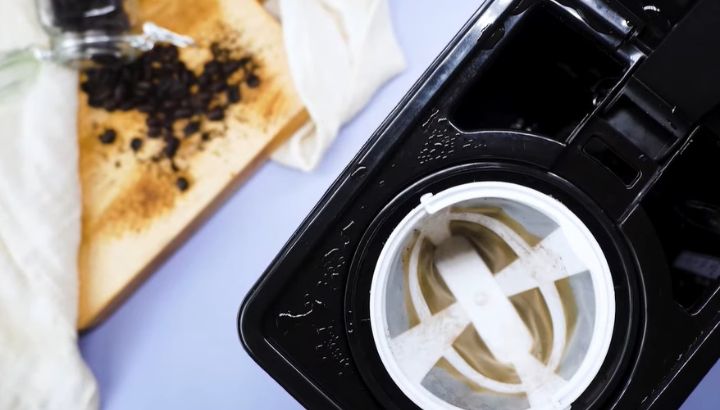
To clean a coffee maker with vinegar, fill the water reservoir with a 50/50 mixture of white distilled vinegar and water, run a full brew cycle without coffee, pause the machine halfway through for 30 minutes to let the solution soak the internal components, then complete the cycle and run two to three fresh water rinse cycles.
This process dissolves mineral scale from the heating element, water lines, and spray head, removes coffee oil residue from internal tubing, and eliminates bacteria buildup that causes off-tasting and slow-brewing coffee.
Clean your coffee maker with vinegar every 1 to 3 months depending on water hardness and usage frequency. Machines in hard water areas or used multiple times daily need cleaning closer to every 4 to 6 weeks.
Most coffee makers that produce bitter, weak, or strange-tasting coffee aren’t broken. They’re scaled up, oily inside, and long overdue for a thorough clean. The heating element, water tubes, spray head, and carafe all accumulate mineral deposits and coffee oils over hundreds of brew cycles, and these buildups directly degrade both brew temperature and flavor quality.
White distilled vinegar is one of the most effective and affordable descaling agents available for home coffee maker maintenance. Its acetic acid content dissolves calcium and magnesium carbonate deposits that form on heating elements and water lines without damaging internal components or leaving behind harmful chemical residues.
This guide covers the complete vinegar cleaning process for every major coffee maker type, including drip machines, single-serve brewers, thermal carafe models, and espresso machines, with specific instructions for popular models and the most common mistakes that prevent a thorough clean.
Why Coffee Makers Need Regular Vinegar Cleaning
Mineral Scale and the Heating Element
Every milliliter of tap water that passes through a coffee maker carries dissolved minerals, primarily calcium carbonate and magnesium. These minerals don’t evaporate with the water. They deposit directly onto the heating element, internal water tubes, and the spray head that distributes water over the coffee grounds.
Scale acts as thermal insulation on the heating element, forcing it to consume more energy and take longer to reach the target brewing temperature of 195°F to 205°F. A scaled heating element can drop brew water temperature by 10°F to 20°F below the optimal range, producing consistently under-extracted, weak coffee regardless of grind quality or coffee dose.
In severe cases, scale partially blocks the narrow water channels inside the machine. This causes incomplete saturation of the coffee grounds, slow drip times, and partial carafes even when a full reservoir was filled.
Coffee Oil Residue in the Brew Path
Coffee beans contain natural oils that transfer to the brewed liquid and coat every surface they contact. Over time, these oils oxidize and turn rancid inside the spray head, filter basket holder, and carafe. Rancid coffee oil produces a stale, bitter, or musty taste that contaminates every subsequent brew.
Vinegar’s mild acidity cuts through oxidized coffee oils along with mineral scale, making it effective against both primary sources of flavor degradation in a single cleaning cycle. Commercial descaling solutions target mineral scale specifically but don’t address the organic oil residue the way an acetic acid solution does.
Bacteria and Mold in Warm, Wet Components
The internal brew path of a drip coffee maker stays warm and moist after every use, creating conditions that support bacterial and mold growth over time. The water reservoir, carafe, and filter basket are the highest-risk components because they hold standing water or wet grounds after brewing.
A 2011 NSF International study found that coffee maker reservoirs ranked among the top ten germiest places in the home, with coliform bacteria and yeast present in a significant percentage of tested machines. Regular vinegar cleaning of the full brew path controls microbial growth across all these surfaces simultaneously.
How Vinegar Cleans a Coffee Maker
The Acetic Acid Descaling Mechanism
White distilled vinegar contains 5% acetic acid, which reacts chemically with calcium carbonate scale to form calcium acetate, water, and carbon dioxide. Calcium acetate is water-soluble and flushes out of the machine during the brew cycle, leaving the heating element and water lines clear.
This reaction works most effectively when the vinegar solution has time to sit in contact with the scale rather than simply flowing through. This is why the mid-cycle pause step is critical: stopping the brew cycle halfway and letting the solution soak for 30 minutes dramatically improves scale removal compared to running a continuous cycle.
The effectiveness of vinegar on heavy scale depends on the concentration and contact time. A 50/50 vinegar-to-water ratio is the standard recommendation for routine cleaning. For machines that haven’t been cleaned in over 6 months or show visible scale buildup, undiluted vinegar in the first pass produces significantly better results.
What Vinegar Does Not Clean
Vinegar is highly effective on mineral scale and mildly effective on organic residue but does not remove all types of coffee maker contamination. It doesn’t remove coffee grounds physically lodged in the spray head holes or filter basket, and it doesn’t sanitize surfaces to a clinical level.
Physical cleaning of the filter basket, carafe, spray head, and removable components with dish soap and a brush is still necessary alongside the vinegar cycle. The vinegar run handles the internal components you can’t reach by hand; manual washing handles everything else.
Coffee Maker Types and Vinegar Cleaning Variations
Standard Drip Coffee Makers
Standard drip coffee makers like the Cuisinart DCC-3200, Hamilton Beach 49350, and Mr. Coffee 12-Cup follow the classic vinegar cleaning method: fill the reservoir with a 50/50 vinegar-water solution, run a half cycle, pause for 30 minutes, complete the cycle, then run two fresh water rinse cycles.
These machines have a single brew path from reservoir through heating element to spray head and filter basket, making them the most straightforward type to descale. The entire internal surface area is exposed to the vinegar solution during a single brew cycle.
Most standard drip makers don’t have a dedicated cleaning mode, so the manual half-cycle pause method is the primary technique. The Cuisinart DCC-3200 is an exception, featuring a self-clean button that automates the pause and soak process when activated with the vinegar solution in the reservoir.
Thermal Carafe Coffee Makers
Thermal carafe models like the Cuisinart DTC-975BKN and Technivorm Moccamaster KBT use an insulated stainless steel carafe instead of a glass carafe on a warming plate. The brew path cleaning process is identical to standard drip makers, but the carafe requires separate treatment.
Fill the thermal carafe with undiluted white vinegar and let it soak for 15 to 20 minutes to dissolve coffee oil and scale deposits from the interior walls. The narrow neck of a thermal carafe makes scrubbing difficult, and vinegar soaking is the most effective alternative to physical brushing.
Rinse the thermal carafe thoroughly with hot water at least three times after the vinegar soak. Vinegar residue inside an insulated carafe is difficult to detect until it flavors the next batch of coffee.
Single-Serve Pod Coffee Makers
Keurig models (K-Classic, K-Elite, K-Supreme) and other single-serve machines like the Nespresso Vertuo and De’Longhi Nespresso can be cleaned with vinegar on models that don’t specify otherwise in the owner’s manual. However, Keurig’s official recommendation is their branded descaling solution rather than vinegar, and some Nespresso models require manufacturer-approved descalers only.
For Keurig machines where vinegar is acceptable, fill the reservoir with undiluted white vinegar, run brew cycles at the largest cup size with no pod inserted until the reservoir empties, then run two to three full reservoir rinse cycles with fresh water. The vinegar smell requires more rinse cycles in single-serve machines than in drip makers because the internal water lines are narrower and retain vinegar longer.
Espresso Machines
Home espresso machines like the Breville Barista Express, De’Longhi Magnifica, and Gaggia Classic Pro are not recommended for vinegar cleaning by most manufacturers. Espresso machines use high-pressure pumps, brass group heads, and rubber gaskets that can degrade with repeated acid exposure.
Most espresso machine manufacturers specify proprietary descaling tablets or solutions that are pH-calibrated for the specific materials in their machines. Using undiluted vinegar in an espresso machine voids the warranty on most models and can damage the solenoid valve, brass boiler, and rubber seals over time.
For espresso machines that specifically allow vinegar, use a highly diluted solution (1 part vinegar to 4 parts water) and follow immediately with at least four fresh water flush cycles through the group head and steam wand.
Drip Makers With Built-In Grinders
Combo machines like the Cuisinart Grind and Brew DGB-900BC and Breville Grind Control BDC650BSS have a built-in burr grinder that feeds directly into the brew basket. The grinder and its chute are separate from the water system and must be cleaned independently.
The vinegar cycle cleans only the water path in these machines. Coffee oils and grounds in the grinder chamber require a weekly wipe-down with a dry brush and a monthly pass with a damp cloth. Never run water or vinegar through the grinder mechanism itself.
| Coffee Maker Type | Vinegar Ratio | Soak Time | Rinse Cycles | Special Notes |
|---|---|---|---|---|
| Standard drip | 50/50 vinegar to water | 30 minutes mid-cycle | 2 full cycles | Straightforward, most common |
| Thermal carafe drip | 50/50 vinegar to water | 30 minutes mid-cycle | 2 to 3 cycles | Soak carafe separately |
| Single-serve (Keurig) | Undiluted vinegar | No pause needed | 3 to 4 cycles | More rinse cycles required |
| Espresso machine | Not recommended | N/A | N/A | Use manufacturer descaler |
| Drip with grinder | 50/50 vinegar to water | 30 minutes mid-cycle | 2 full cycles | Clean grinder separately |
What You Need Before You Start
Supplies Required
You need white distilled vinegar (5% acidity), fresh filtered water, a large bowl or measuring jug for mixing the solution, and dish soap and a soft brush for the manual cleaning portions. A bottle brush sized for your carafe and a small cleaning brush or toothbrush for the spray head are also useful.
Use only white distilled vinegar for coffee maker cleaning. Apple cider vinegar, balsamic vinegar, and wine vinegar all contain sugars, organic compounds, and colorants that leave residue inside the machine and can support bacterial growth. White distilled vinegar is pure enough to rinse out cleanly with water cycles.
Do not use cleaning vinegar (typically 6% to 10% acidity) at full strength in standard drip coffee makers. Its higher acid concentration can degrade rubber seals and internal plastic components with repeated use. Dilute it to the same effective strength as standard vinegar before use.
Checking Your Cleaning Frequency
Water hardness determines how frequently your machine needs the vinegar treatment. In soft water areas (below 60 ppm hardness), cleaning every 3 months is sufficient. In moderate water hardness areas (60 to 120 ppm), clean every 6 to 8 weeks. In hard water areas above 120 ppm, clean every 4 weeks.
Most municipal water suppliers publish water hardness data online for their service areas. A basic water hardness test strip (available at hardware stores for under $10) gives you an accurate reading for your specific tap water in under 2 minutes.
Step-by-Step: How to Clean Coffee Maker With Vinegar
Step 1: Prepare the Machine and Remove Loose Components
Remove the filter basket and any paper or permanent coffee filter from the machine. Wash the filter basket, basket holder, and carafe separately with warm soapy water and a brush. These components accumulate coffee oil and grounds that physical washing removes more effectively than a vinegar cycle.
Empty and rinse the water reservoir to remove any stale water. If the reservoir has a charcoal water filter cartridge installed (as in many Cuisinart and some Breville models), remove it before adding vinegar. Vinegar saturates charcoal filters and destroys their filtration effectiveness permanently.
Step 2: Mix and Add the Vinegar Solution
For routine monthly or bi-monthly cleaning, mix equal parts white distilled vinegar and cold water. For a 12-cup machine with a 60 oz reservoir, that means 30 oz of vinegar and 30 oz of water. For a machine that hasn’t been cleaned in more than 6 months or shows visible scale on accessible components, use undiluted vinegar for the first pass.
Pour the solution into the empty water reservoir. Do not add a coffee filter or grounds to the filter basket for this cycle. Place the empty carafe in its position on the warming plate so the solution drips into it rather than onto the counter.
Step 3: Start the Brew Cycle and Pause Halfway
Start a full brew cycle as you normally would. When approximately half the solution has brewed through and begun dripping into the carafe, pause the cycle by pressing the brew button or using the pause-and-pour feature if your machine has one.
Let the machine sit with the vinegar solution halted inside the internal water lines and heating element area for 30 minutes. This soak period is the most important step in the entire process. The extended contact between the acetic acid solution and the scale deposits on the heating element produces far more dissolution than a continuous flow-through cycle.
After 30 minutes, resume the brew cycle and let it complete fully. The solution that runs through in the second half of the cycle flushes the dissolved scale and loosened residue out of the machine.
Step 4: Discard the Vinegar Solution and Clean the Carafe
Pour the vinegar solution from the carafe down the sink. Wash the carafe with warm soapy water and a bottle brush immediately after emptying it, since vinegar residue on the carafe walls can leave an acetic smell if allowed to dry.
Wipe down the warming plate with a damp cloth while it’s still warm but not hot. Coffee drips bake onto warming plates over time and become difficult to remove when cool. A damp cloth at this stage removes fresh residue easily without any chemical assistance.
Step 5: Run Fresh Water Rinse Cycles
Fill the reservoir to its maximum capacity with fresh filtered water. Place the empty carafe back in position and run a complete brew cycle with no filter or grounds. This first rinse cycle flushes the majority of vinegar residue from the internal water lines and heating element surfaces.
Empty the carafe after the first rinse cycle and immediately run a second complete fresh water cycle. Two full rinse cycles are the minimum for a 50/50 vinegar solution. If you used undiluted vinegar for the first pass, run three full rinse cycles before testing the output for residual vinegar smell.
After the final rinse cycle, smell the water in the carafe before brewing coffee. If you detect any vinegar odor, run an additional rinse cycle. The smell test is more reliable than counting cycles since internal tube volume and flow rate vary across models.
Step 6: Reinstall Components and Test Brew
Reinstall the water filter cartridge if your machine uses one. Insert a new or clean permanent filter into the filter basket, add coffee, and run a test brew cycle with fresh filtered water. Discard this first cup after the cleaning cycle as a precaution even if the rinse cycles smelled clean.
The test brew also verifies that the cleaning cycle resolved any performance issues. A successfully descaled machine produces a noticeably faster drip rate, a fuller carafe at the correct volume, and coffee at a higher temperature than before the cleaning.
Common Mistakes and How to Fix Them
Not Pausing for the Soak Step
Running a continuous vinegar cycle without the 30-minute pause is the most common reason vinegar cleaning produces underwhelming results. The acetic acid needs extended contact time to dissolve hardened calcium carbonate, particularly in machines that have months or years of accumulated scale on the heating element.
If your machine brewed through the full vinegar cycle without a pause and the coffee still tastes off afterward, run a second vinegar cycle immediately with the pause step included before moving to rinse cycles.
Using Too Little Vinegar
Diluting the vinegar more than a 50/50 ratio (for example, 25% vinegar to 75% water) produces a solution with insufficient acidity to break down moderate to heavy scale deposits. Light mineral buildup in machines cleaned every 4 to 6 weeks responds to diluted solutions, but anything beyond 2 months of accumulation requires the standard 50/50 ratio at minimum.
Assess your machine’s scale burden before choosing the concentration. If the carafe takes longer than 8 minutes to fill during a brew cycle, visible scale is present on the spray head, or you can see chalky white residue in the reservoir, start with undiluted vinegar for the first cleaning pass.
Running Insufficient Rinse Cycles
One rinse cycle after a vinegar cleaning is almost never sufficient to fully clear vinegar residue from the internal water lines. Machines with narrow internal tubing, long water paths, or low flow rates retain vinegar-flavored water significantly longer than machines with wider, shorter water paths.
Always run a minimum of two full fresh water rinse cycles after a 50/50 solution and three after undiluted vinegar. Confirm the output smells neutral before reinstalling the coffee filter and grounds. A single coffee brew immediately after insufficient rinsing produces a noticeably vinegar-flavored cup that wastes good coffee.
Pro Tips for Better Results
Clean the Spray Head Separately
The spray head (also called the shower head) that distributes water over the coffee grounds is one of the most scale-prone components in a drip coffee maker, yet it’s frequently ignored during cleaning. Scale deposits on the spray head holes reduce and redirect water flow, causing uneven saturation of the coffee bed and under-extraction in certain areas.
On machines like the Cuisinart DCC-3200 and Breville Precision Brewer, the spray head unscrews or unclips for access. Soak it in undiluted vinegar for 15 minutes and use a toothpick or small brush to clear each hole individually before reinstalling.
Use Filtered Water to Extend Cleaning Intervals
Using filtered water from a pitcher filter like a Brita Longlast or PUR Classic significantly reduces the mineral content entering your coffee maker with every brew. Reduced mineral input means slower scale accumulation and longer intervals between required vinegar cleanings.
In hard water areas where monthly cleaning would otherwise be necessary, filtered water can extend the interval to every 2 to 3 months without any reduction in machine performance. The filter cartridge cost is far less than the time and vinegar cost of monthly cleaning cycles.
Deep Clean the Carafe Monthly
The glass carafe develops a brown coffee oil film on its interior walls that becomes increasingly resistant to regular dish soap washing over time. Fill the carafe with a mixture of hot water, two tablespoons of white distilled vinegar, and one tablespoon of baking soda and let it soak for 15 minutes.
The mild fizzing reaction between the vinegar and baking soda lifts oxidized coffee oil from the glass surface without scratching. Swirl and scrub with a bottle brush, then rinse thoroughly. This monthly carafe soak keeps glass surfaces clean and prevents the stale taste that a brown-coated carafe imparts to fresh coffee.
Frequently Asked Questions
How much vinegar do I use to clean a coffee maker?
For a standard 12-cup coffee maker with a 60 oz reservoir, use 30 oz of white distilled vinegar mixed with 30 oz of water for a 50/50 solution. For a smaller 8-cup machine with a 40 oz reservoir, use 20 oz of each.
For machines that haven’t been cleaned in 6 months or more, use undiluted vinegar at the full reservoir capacity for the first cleaning pass. Always match the total solution volume to the full reservoir capacity so the vinegar solution reaches every part of the internal water path during the brew cycle. Scale deposits in machines with partially filled reservoirs may not be fully reached.
How long should vinegar sit in a coffee maker?
Vinegar should sit inside the coffee maker for at least 30 minutes during the mid-cycle pause step. This soak time allows the acetic acid to react with and dissolve mineral scale deposits on the heating element, water tubes, and spray head more effectively than a continuous flow-through cycle.
For machines with very heavy scale buildup, extending the soak to 45 to 60 minutes produces better results without damaging the machine. After soaking, complete the brew cycle to flush the dissolved scale out, then run fresh water rinse cycles to clear the vinegar residue from all internal components.
How do I get rid of the vinegar taste after cleaning?
Run two to three complete fresh water rinse cycles through the machine after the vinegar cleaning cycle, using the maximum reservoir capacity each time. After the final rinse, smell the water output from the carafe before adding coffee. No vinegar odor should be detectable.
If you still smell vinegar after three rinse cycles, run a fourth. The vinegar taste comes from residual acetic acid in the narrow internal water lines, and the only way to remove it is repeated flushing with fresh water.
Installing a fresh charcoal water filter cartridge in the reservoir after the rinse cycles also helps absorb any remaining trace acidity before it reaches the cup.
Can I use apple cider vinegar to clean my coffee maker?
No. Apple cider vinegar contains natural sugars, organic compounds, and tannins that leave residue inside the machine and can support bacterial growth in the warm, moist internal environment.
It also has a stronger and more persistent odor than white distilled vinegar, requiring significantly more rinse cycles to clear. White distilled vinegar at 5% acidity is the correct choice because it contains only acetic acid and water with no organic residue.
It rinses out cleanly, leaves no flavoring compounds behind, and provides the same descaling effectiveness at a fraction of the cost of commercial descaling solutions.
How often should I clean my coffee maker with vinegar?
Clean your coffee maker every 1 to 3 months depending on water hardness and how frequently you brew. In hard water areas above 120 ppm, clean every 4 weeks.
In moderate hardness areas between 60 and 120 ppm, clean every 6 to 8 weeks. In soft water areas or if you use filtered water consistently, every 3 months is sufficient. Signs that cleaning is overdue include slower brew times, coffee that tastes bitter or off, a carafe that fills to less than its rated capacity, visible white scale deposits in the reservoir or on the spray head, or a warming plate that takes noticeably longer to heat.
Is vinegar safe for all coffee maker types?
Vinegar is safe for standard drip coffee makers, thermal carafe drip machines, and most single-serve pod brewers including Keurig models. It is not recommended for most espresso machines, which use brass components, rubber seals, and high-pressure pumps that can degrade with repeated acid exposure.
Most espresso machine manufacturers including Breville, De’Longhi, and Gaggia specify proprietary descaling tablets or solutions and void the warranty if vinegar is used instead. For single-serve machines, check the owner’s manual since some Nespresso models and newer Keurig models also recommend manufacturer-specific solutions rather than vinegar.
Why is my coffee still tasting bad after cleaning with vinegar?
If coffee tastes off after a complete vinegar cleaning and rinse, there are four likely causes. First, insufficient rinsing left vinegar residue in the water lines. Run two more fresh water cycles and re-test. Second, the filter basket or carafe still has oxidized coffee oil buildup that the vinegar cycle didn’t reach. Wash both manually with warm soapy water and a brush. Third, the charcoal water filter wasn’t replaced after cleaning and is releasing absorbed contaminants. Replace it with a fresh cartridge. Fourth, the coffee beans or grounds themselves are stale. Test with a fresh bag before concluding the machine is the problem.
What is the difference between vinegar and commercial descaling solution?
White distilled vinegar and commercial descaling solutions both remove mineral scale through acid-based chemical reactions, but they differ in composition, concentration, and residue profile.
Commercial descaling solutions like Keurig Descaling Solution, Dezcal by Urnex, and Breville Descaler are formulated with citric acid or sulfamic acid at calibrated concentrations that are effective on scale while being gentler on rubber seals and internal components than acetic acid. They’re odorless and require fewer rinse cycles.
Vinegar costs significantly less, is available everywhere, and works equally well on mineral scale. The practical choice depends on your machine type, convenience preference, and how much rinse time you’re willing to invest.
Can I clean a coffee maker with vinegar and baking soda together?
You can use them separately but not simultaneously in the water reservoir. Mixing vinegar and baking soda creates a rapid fizzing reaction (acetic acid reacting with sodium bicarbonate to produce CO2) that neutralizes the acid you need for descaling.
The fizzing looks active but cancels out the cleaning effectiveness of both ingredients. The correct approach is to run the vinegar cycle through the machine’s brew path for internal descaling, then separately use a vinegar and baking soda soak in the carafe or reservoir for cleaning those specific surfaces where the physical action of the carbonation helps lift stubborn staining.
Conclusion
Vinegar is the most practical, accessible, and cost-effective method for maintaining a drip coffee maker’s internal performance, and understanding how to clean coffee maker with vinegar correctly makes the difference between a cleaning cycle that actually works and one that just removes surface-level odors.
The 30-minute mid-cycle soak is the step most people skip and the one that matters most. Paired with thorough manual washing of the filter basket, spray head, and carafe, a proper vinegar cleaning cycle restores brew temperature, flow rate, and cup flavor to near-new performance in machines that have been neglected for months.
For daily home brewers, the practical routine is straightforward: manual part washing weekly, a vinegar cycle every 1 to 3 months based on water hardness, and a charcoal water filter replacement every 2 months. Follow that schedule consistently and your coffee maker will produce better-tasting coffee for significantly longer before any component failure makes it worth replacing. That outcome is exactly what knowing how to clean coffee maker with vinegar is designed to deliver.